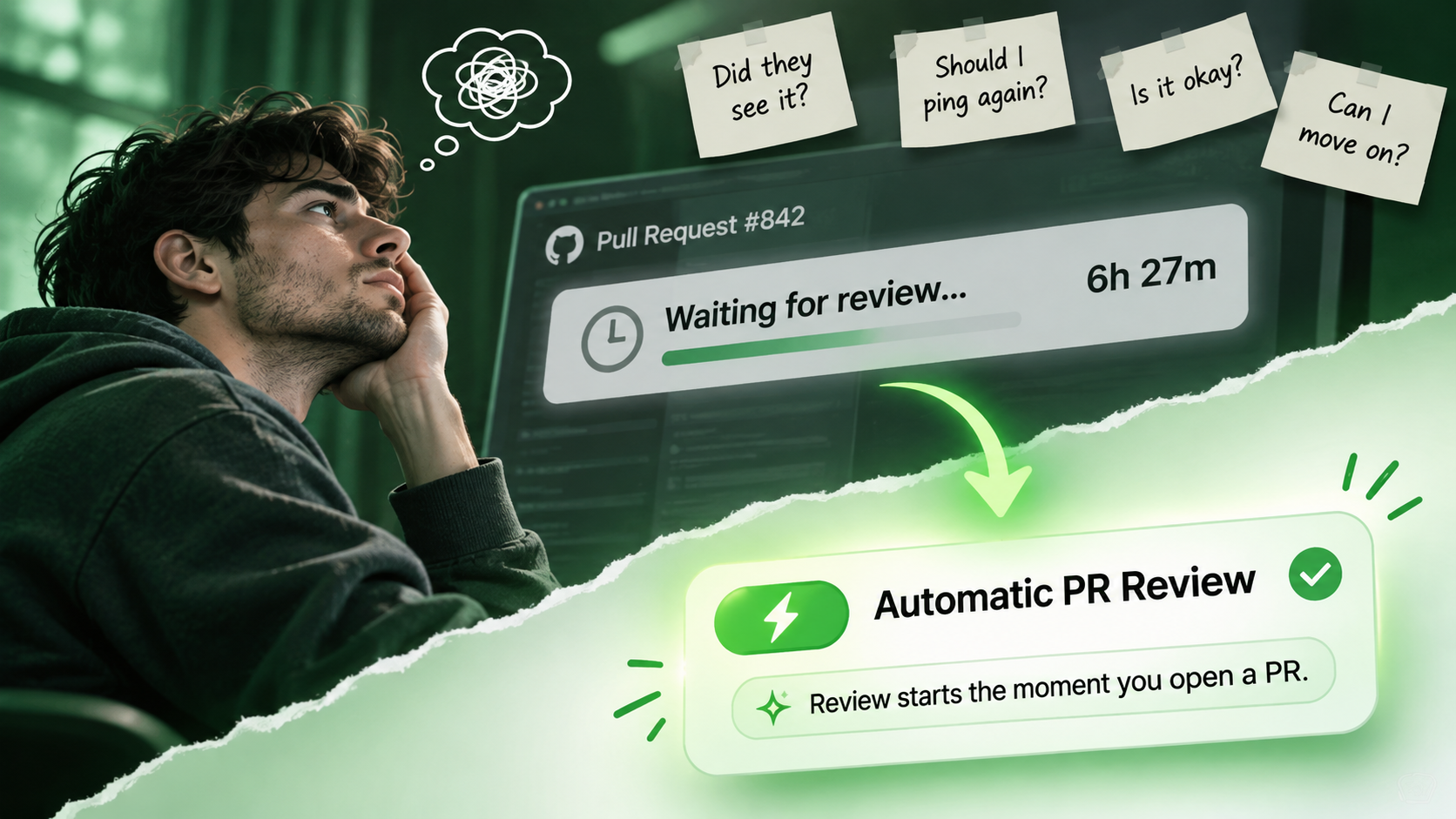
AI has made one part of software development incredibly fast: writing code.
Need a function? Generate it.
Need a unit test? Ask AI.
Need help understanding an unfamiliar API? Get an explanation in seconds.
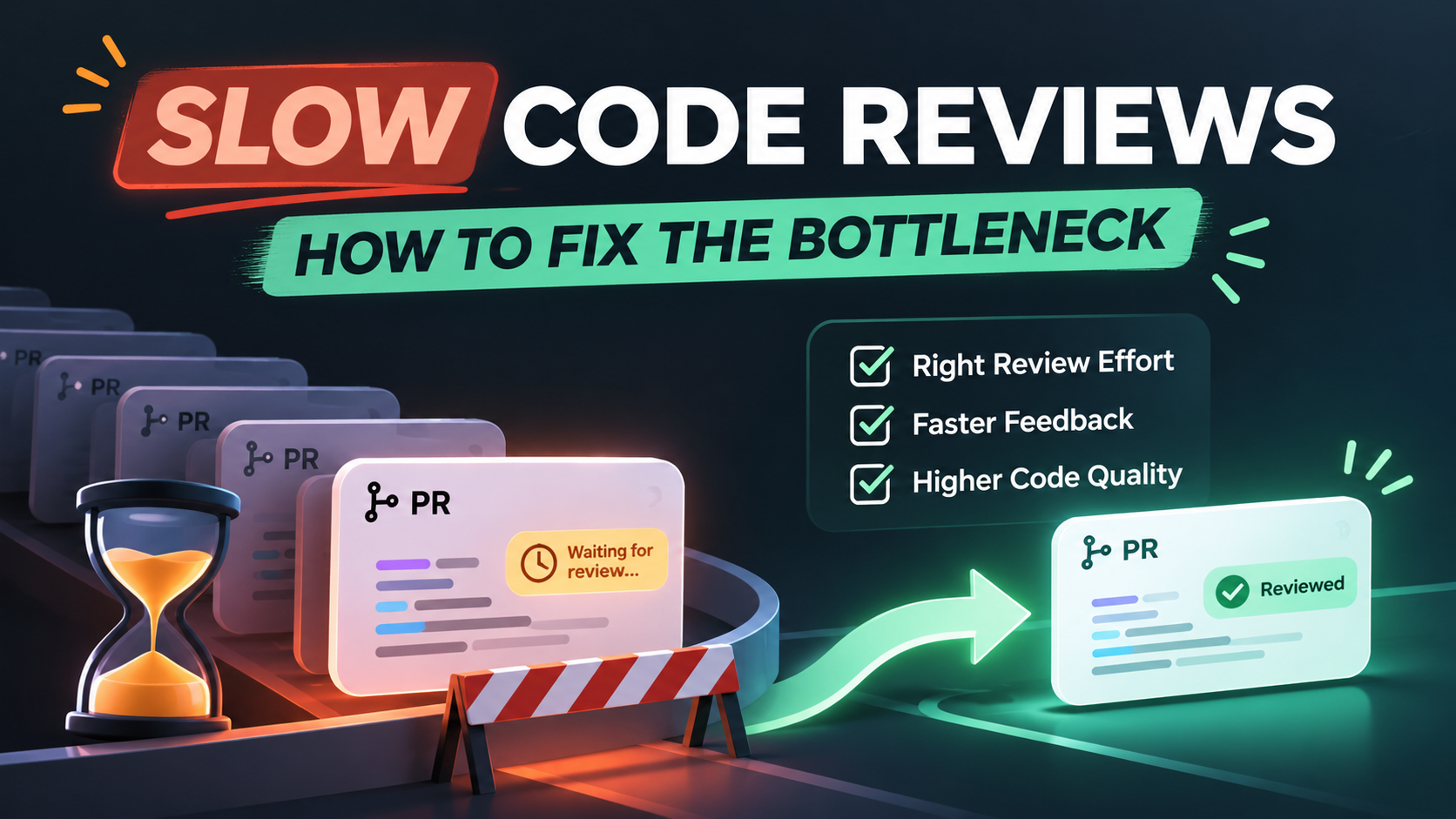
But after the code is written, the developer workflow still looks familiar:
Write Code
    ↓
Open Pull Request
    ↓
Code Review
    ↓
Fix Issues
    ↓
Run Tests
    ↓
Review Again
    ↓
Ship
AI has accelerated the first step.
The interesting question is whether it can help improve everything that comes after it.
This is where AI code review and automated code fixes start becoming important.
The Problem Isn't Always Finding the Bug
Let's say you have this code:
function getUserName(user) {
  return user.profile.name;
}
It works perfectly—until user.profile is undefined.
A reviewer might leave this comment:
profilecan be undefined here. Consider handling that case.
That's useful feedback.
But the actual work still belongs to the developer:
- Read the comment.
- Understand the failure scenario.
- Decide how the application should behave.
- Update the code.
- Run the tests.
- Push another commit.
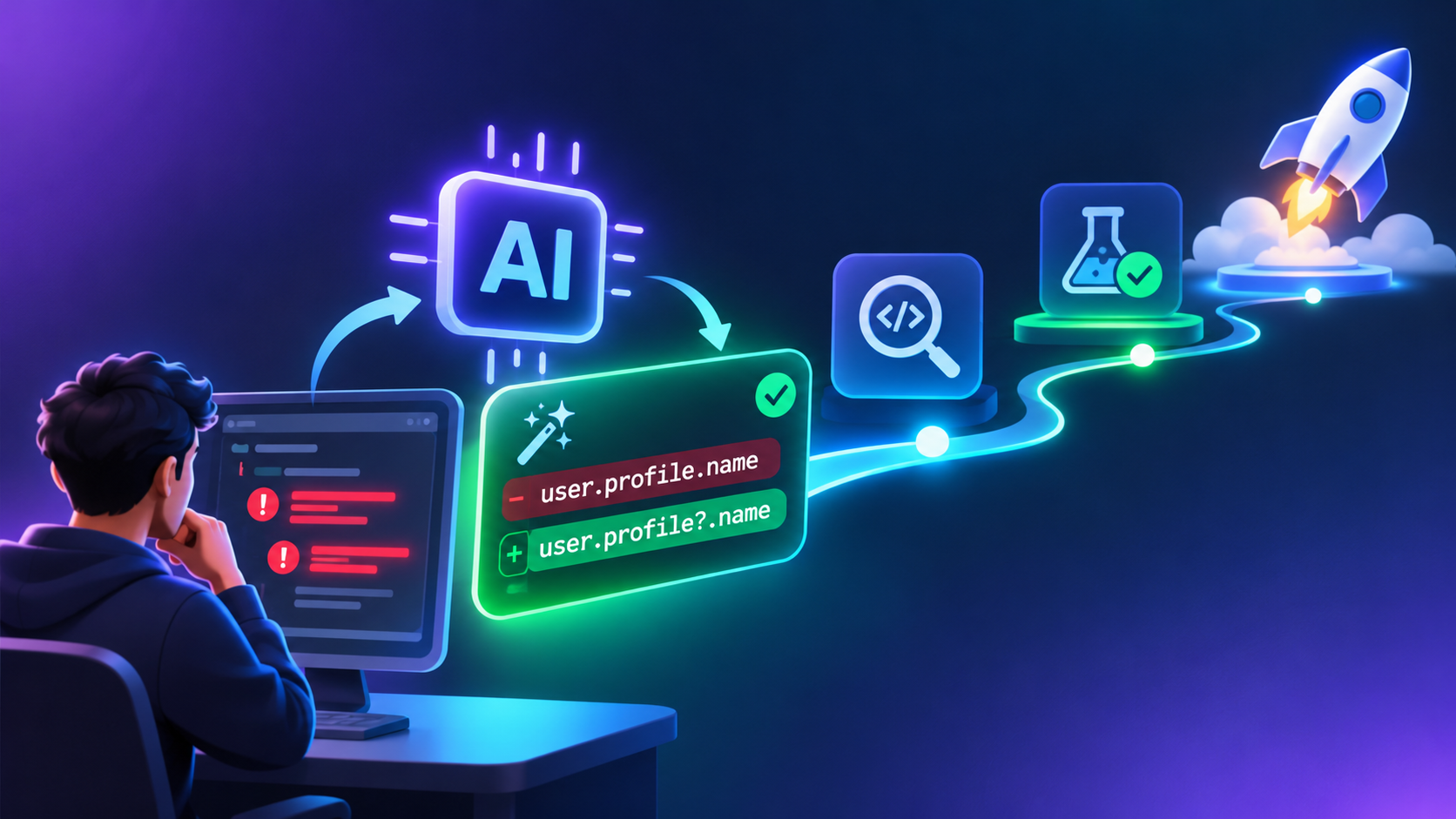
For this example, a possible fix could be:
function getUserName(user) {
  return user.profile?.name ?? "Unknown";
}
An AI code review system could identify the potential issue and suggest a possible fix.
But there is an important distinction:
A suggested fix is not the same as an automatic fix.
The AI doesn't necessarily know whether "Unknown" is the correct business decision.
The developer does.
What Automated Code Fixes Actually Change
Automated code fixes can shorten the path between:
Problem found → Problem understood → Fix implemented
Instead of only reporting:
"This code may fail."
A useful system can provide:
- The location of the issue
- An explanation of why it matters
- The potential impact
- A suggested code change
That changes code review from a list of problems into a more actionable workflow.
A practical model looks like this:
AI detects a potential issue
            ↓
Explains the risk
            ↓
Suggests a possible fix
            ↓
Developer reviews the change
            ↓
Tests validate the behavior
            ↓
Code is shipped
The developer remains responsible for the final decision.
AI reduces the repetitive investigation.
The Hidden Cost of Small Review Issues
Let's use a simple hypothetical example.
Imagine an engineering team processes 100 pull requests every month.
If small review comments and repetitive fixes take an average of 15 minutes per pull request, the math looks like this:
100 PRs × 15 minutes = 1,500 minutes
That's approximately:
25 engineering hours every month.
If better review workflows and automated fix suggestions reduce that time by 40%:
25 hours × 40% = 10 hours saved per month
Over a year:
10 hours × 12 months = 120 engineering hours.
These numbers will vary between teams. The point isn't that every company will save exactly 120 hours.
The point is that small delays become expensive when they happen repeatedly.
And the cost can become much larger when an issue isn't discovered until after the code reaches production.
AI Infrastructure Is Moving Beyond Code Generation
The next generation of developer tools may not focus only on generating code.
Instead, we're seeing AI become part of the broader AI infrastructure for developers.
The development lifecycle can increasingly be supported by AI:
Write
AI helps developers create an initial implementation.
Review
AI code review analyzes pull requests and looks for meaningful bugs, security risks, and potential issues.
Fix
AI can explain problems and suggest possible changes.
Test
AI can help generate tests and identify missing edge cases.
Ship
Automation and CI/CD workflows help teams safely ship the code.
The goal is not to put AI in charge of every decision.
The goal is to reduce friction between each stage.
Why Developers Still Need to Be in Control
Software doesn't exist in isolation.
A code suggestion might be syntactically correct but architecturally wrong.
For example, changing a function to return a default value might prevent a crash—but it could also hide an important data problem.
That's why the best AI-assisted workflow isn't:
AI finds bug → AI fixes bug → Deploy
A more reliable workflow is:
AI finds a potential issue
        ↓
AI explains why it matters
        ↓
AI suggests a possible solution
        ↓
Developer reviews the context
        ↓
Tests validate the change
        ↓
Team ships the code
AI provides assistance.
Developers provide context and judgment.
Where Does Codzee Fit Into This?
This shift toward AI infrastructure creates an interesting opportunity for tools that operate after code has been written.
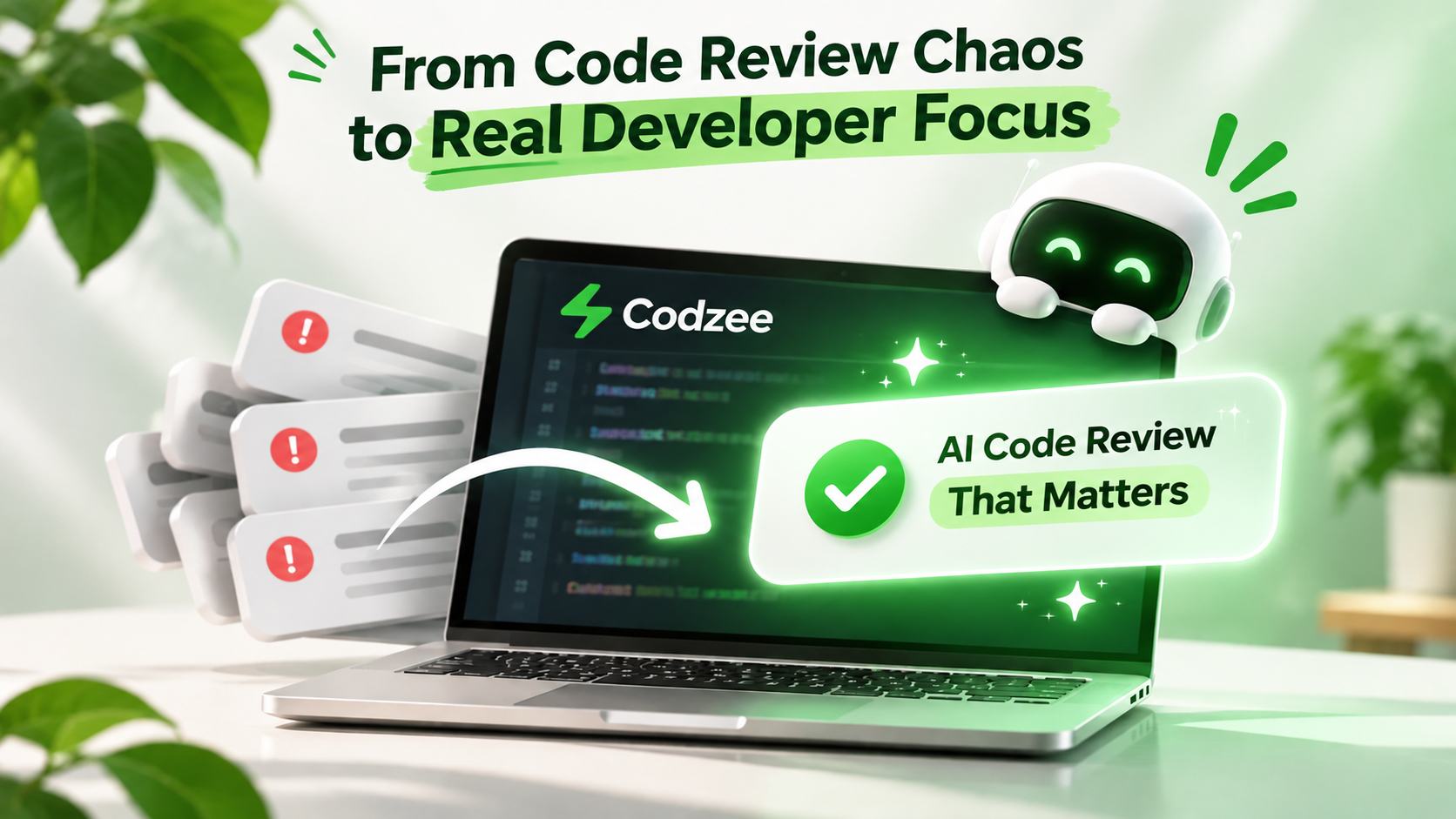
Tools like Codzee are part of the growing AI code review layer, helping developers analyze pull requests and identify meaningful bugs and security risks.
The larger idea is simple: code generation is only the beginning of the software development process.
Developers still need to review, understand, fix, test, and ship the code.
AI can help reduce repetitive work during that journey—but the developer should remain in control of the final decision.
Final Thoughts
We are quickly getting better at generating code.
The next challenge is making sure we can handle the code we generate.
As AI increases the volume of code entering repositories, code review, testing, and deployment workflows will become increasingly important.
The future may not belong to a single AI tool that does everything.
Instead, it may be built from better AI infrastructure for developers that supports the entire journey:
Write → Review → Fix → Test → Ship
Because writing code faster is useful.
Shipping reliable code faster is the real goal.
About the author
- Codzee is building the future of AI-powered code reviews for modern engineering teams. We help developers review pull requests faster, improve code quality, and ship software with confidence. Codzee analyzes your code, highlights potential issues, suggests meaningful improvements, and delivers actionable feedback that fits your team's coding standards and workflow. Our mission is simple: make code reviews faster, smarter, and more collaborative without disrupting how developers work. Whether you're a startup shipping your first product or a growing engineering organization, Codzee helps reduce review bottlenecks, maintain consistent code quality, and improve developer productivity. At Codzee, we believe AI should support developers, not replace them. That's why we're building AI Code Review That Respects Your Team.
Comments
Join the discussionNo comments yet. Be the first to comment.